Film Extrusion
Plastic film extrusion is one of the most important processes in our industry though we cant rely on any ordinary supplier. To come up with the best possible quality we have invested in state of the art machinery to produce the films in house.
Blown films extrusion is one of many polymer manufacturing processes. This method is used to produce commodity and specialized polymer films that are typically used in packaging such as laminate, shrink, stretch, barrier films (used to protect deli meat), frozen food packaging, and shopping bags.
There are many types of polymers that can be used in blown film extrusion with the most common being polypropylene and polyethylene (LDPE, HDPE and LLDPE). This method can manufacture monolayer films as well as more complex multi-layer films that involve co-extrusion to combine more than one plastic into a single film.
There are many types of polymers that can be used in blown film extrusion with the most common being polypropylene and polyethylene (LDPE, HDPE and LLDPE).
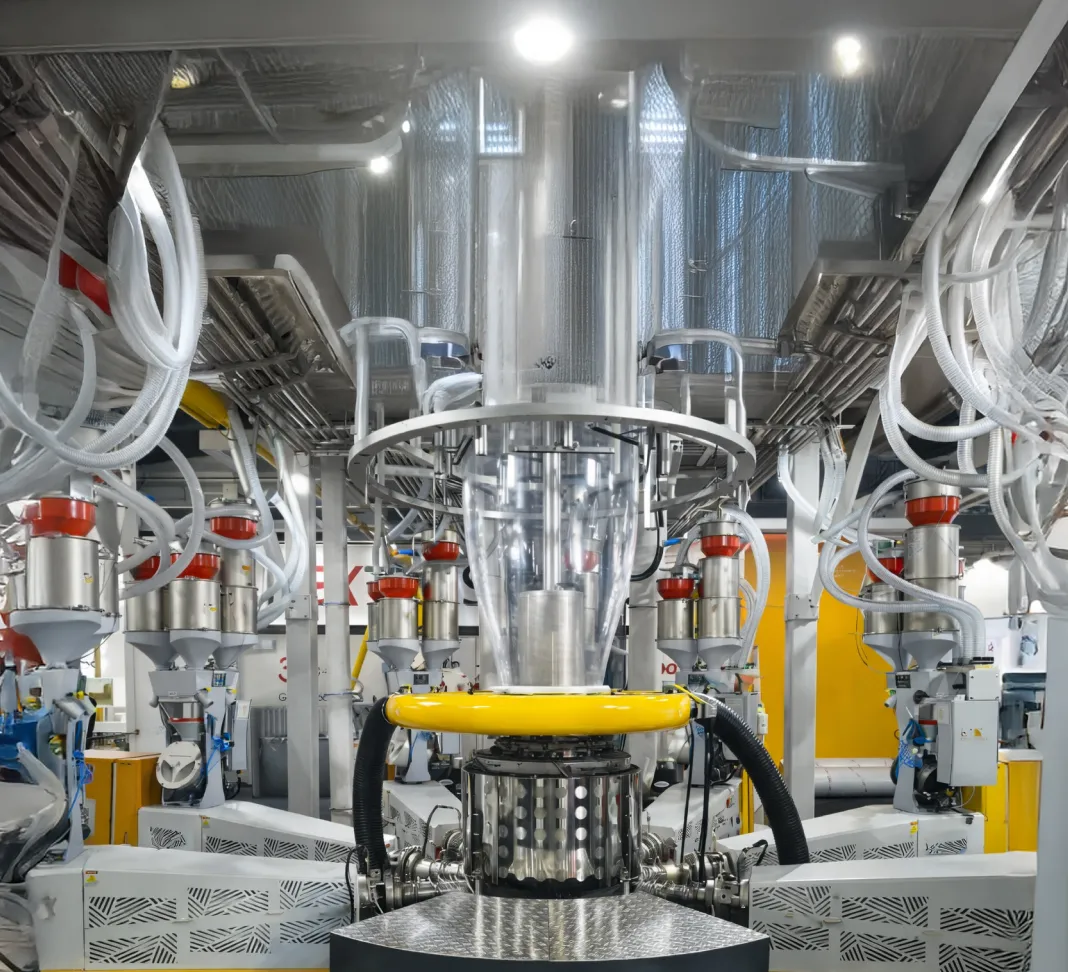
Process of Blown Film Extrusion
Blown film extrusion can be complex so we will now explain each step of the process in detail! The first step is to melt the polymer in an extruder. Polymer resin, often in the form of beads, is loaded into a hopper and fed into a heated barrel with a screw. The screw is used to transport the polymer down the barrel. The beads are gradually heated to melt the polymer. The heat profile is an important part of extrusion as the polymer may thermally degrade if overheated. When the molten material reaches the end of the barrel, it is extruded through a die. It is at this point that blown film extrusion differs from other extrusion processes.
There are a few different types of dies used in blown film extrusion with the most common being annular, which is a simple circle die. The molten polymer enters the die head and air is injected via a hole in the die center to radially inflate the polymer into a thin tube that is many times its original, extruded diameter. It is this step of the process that can be adjusted to achieve the desired film thickness and width.
The hot tube film is then cooled, typically with high speed air, and pulled upward by equipment called nip rollers. On most medium to large size film lines, this vertical tube may extend several stories into the air. As the film cools it crystallizes at what is called the frost line. As the tube reaches the nip rollers, at the top of the line, the film is now cool enough to flatten and is then referred to as lay-flat or collapsed tubing. The film is then transported downstream by rollers for further processing (e.g. slit, printed, vented, converted into bags) and is eventually wound into rolls.
There are several advantages of manufacturing film using the blown film extrusion process including the ability to manipulate the mechanical properties of the final plastic based on the process conditions and base polymer(s) used. For example, blown film extrusion inflates the polymer radially while at the same time drawing the polymer upward with rollers. These forces stretch the polymer in both the transverse and draw directions, providing strength in the film. The extent of inflating and drawing can be adjusted to achieve the desired strength in the transverse and draw directions of the final product. Blown film extrusion is also versatile and able to manufacture a variety of single or multi-layer films with a range of film thickness and width.
