HD Rotogravure & Flexographic Printing
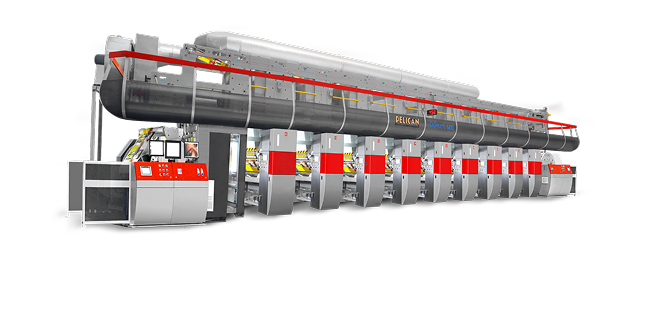
Rotogravure
- Rotogravure is a method of direct rotary printing using a relief printing process.
- During this process, the packaging design is etched directly into a metal cylinder with microscopic cells. The amount of ink released to the substrate is controlled by the depth and size of the individual cells. Fluid ink is applied directly to the engraved cylinder. Metal doctor blades shear excess ink from the surface of the engraved cylinder. The substrate passes between the engraved cylinder and the impression cylinder transferring ink out of the recessed cells in the engraved cylinder onto the substrate.
- This process will occur for each individual ink color making up the package design.
- Reflect the high quality of your products with our high-fidelity 8-color rotogravure printing. Our printing expertise has been recognized by many clients.
- Your flexible packaging will be printed by knowledgeable press operators that have an average of 20 years’ or more experience in rotogravure printing. We offer solvent-based inks with surface as well as reverse printing.
- Award-winning 8-color high speed rotogravure printing.
- Reverse and surface printing up to 1200MM.
- Inline defect detection system.
- Matte coating.
- Accurate bar code printing.
- Sophisticated ink blending systems.
- Accurate in-house custom color matching.
- Spectro-densitometer color control.
Rotogravure is a method of direct rotary printing using a relief printing process.
Flexographic Printing
- Flexography is one of our notable manufacturing capabilities. It is a method of direct rotary printing using raised image printing plates.
- During this process, fluid ink is first applied from the inking system to the anilox roll. The anilox roll is a metal cylinder consisting of microscopic cells. Metal doctor blades shear excess ink from the surface of the anilox roll transferring a thin, controlled layer of ink to the surface of the printing plate. The flexible plates, which contain the image, are adhered directly to the plate cylinder utilizing a double-sided tape called sticky back. The substrate passes between the plate cylinder and the impression cylinder transferring the ink from the surface of the printing plate onto the substrate.
- This process will occur for each individual ink color making up the package design.
